I Mastered the Art of Packing. It Took Me a Decade to Notice What I Left Behind.
What the summer holiday reveals about the load you carry all year.
IDENTITY

The Boot Was Always Full
I was good at packing bags.
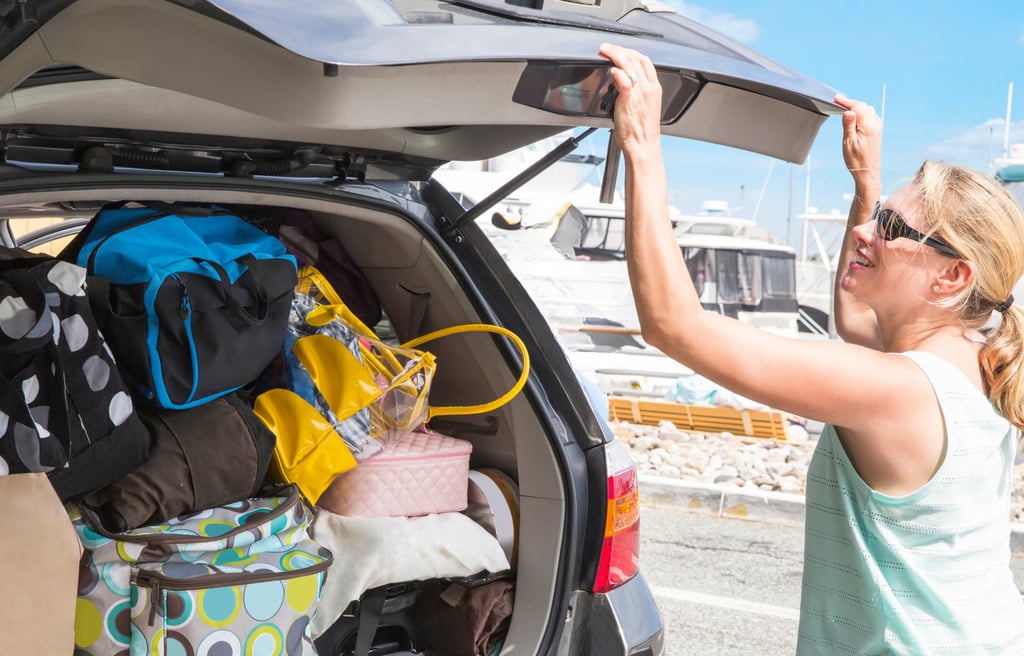
Not just competent. Genuinely skilled. Every summer, the car boot became a kind of puzzle and I had mastered it. Bags slotted in like Tetris pieces. Snacks divided into portions. Entertainment packed for three children at three different stages. My husband would stand and watch, sometimes with what looked like admiration, while I loaded everything in with quiet efficiency.
We were going on holiday. The proof, later, would be in the photographs. Smiling faces. Sunshine. A rental house with a terrace where the children slept inside while we sat outside in the warm evening air. The perfect arrangement for a family with young children.
What the photographs did not show was that I had also packed the household.
I planned the destination, researched the options, compared the prices and made the booking. I packed the sun cream and the after-sun and remembered who was allergic to what. I stayed awake in the passenger seat so my husband would not miss an exit or fall asleep at the wheel. I cooked in the rental kitchen because that was easier with small children than restaurants every night. I supervised at the pool. I anticipated what each child needed before they asked.
I do not think I read a single book for about ten years.
You should know that I love reading.
The Story My Generation Was Told
I grew up believing two things simultaneously, and for a long time I did not notice that they would eventually pull against each other.
The first was that education and career were not optional. They were the foundation. The way you built a life that was yours, that no one could take from you. I understood from an early age that a woman who could stand on her own two feet, who understood money and had qualifications and did not rely on anyone else, was a woman who was safe. I carried that with me, that quiet urgency to build something solid, to become someone who would not be left without options.
The second thing I believed was that I could do it all. That was not just my personal ambition. It was the story my generation of women was told, consistently and enthusiastically. Have the career. Marry. Have the children. Excel at all of it. Be present at work, present at home, present for your friends, present for yourself. Be the colleague who goes the extra mile, the mother who is patient and engaged, the partner who is warm and supportive, the friend who remembers birthdays.
For a long time, I did.
Sometimes, standing in the middle of all of it, I felt like a kind of superwoman. Capable. Organised. Reliable. The person everyone could count on.
But underneath that, something quieter was happening. A low hum I kept turning down.
The Exhaustion That Had No Name
Why was I tired all the time?
Not ordinary tiredness. The kind that sleep did not fix. I went to my doctor more than once. My blood results were fine. Nothing wrong, she said. I bought a light therapy lamp for the winters. I tried meditation. I kept going, because that is what you do when you have been taught that strength means continuing.
I thought the problem was me. That I simply had less energy than other people. That this was just how it felt to be a woman carrying a full life.
What I did not see was that I was holding the entire architecture of a family's life in my head, continuously, without pause. The planning, the anticipating, the monitoring, the remembering. Who needed what and when. What was running low. What was coming next. What could go wrong and how to prevent it before anyone else noticed there had ever been a risk.
Nobody asked me to do this. That is the part that took me longest to understand.
I took it on because it felt natural. Because I was organised and capable and it seemed to flow from who I was. Because somewhere along the way I had absorbed the idea that this was simply what a good mother did, what a reliable professional did, what a loving partner did.
The roles came with invisible job descriptions. And I had read them carefully and taken them very seriously.
The Holiday That Was Never Really a Holiday
The holidays were the clearest mirror.
They were supposed to be rest. Recovery. The reward at the end of a long stretch of ordinary days. But I arrived at every holiday already depleted from the logistics of getting there, and I spent every holiday doing a version of what I did at home. Just in a different kitchen, in a different country, with a different view from the window.
I was never off duty. Not really.
Because the roles came with me. They were not something I put down at the front door when we left. They were something I had become.
My husband relaxed, genuinely and fully, in a way that I somehow never quite managed. He sat. He read. He switched off. And I watched him do it, not with resentment exactly, but with a quiet bewilderment I could not yet name.
I came home from every holiday more tired than when I left.
For years I thought that was just how it was.
What My Body Finally Forced Me to See
Then my body stopped cooperating.
In my forties, perimenopause arrived and it was not subtle. The disrupted sleep, the fatigue that went beyond anything I had known before, the way my nervous system felt like it was running on the wrong voltage. My body, which had been quietly absorbing everything I asked of it for decades, began to push back.
For the first time in my adult life I was forced to slow down. Not by choice. By necessity.
And in that stillness, something happened that I had never allowed space for before.
I looked up.
And I could not find myself anywhere in the picture.
I had been so busy performing the roles, so completely absorbed in what each day required of me, that somewhere along the way I had stopped asking what I actually needed. What I desired. What made me feel like myself, beneath all of it.
Not myself as a mother. Not myself as a professional. Not myself as a partner or a colleague or a friend.
Just myself. As a person. With an interior life that existed before any of the roles, and would exist after them, if I ever gave her room.
That realisation did not arrive as a breakdown. It arrived as a question, quiet and persistent.
Who am I when I am not performing for everyone else?
I did not have an answer. And that frightened me more than the exhaustion ever had.
A Life Can Be Full and Still Have No Room For You
I want to be clear about something, because I think it matters.
This is not a story about an unhappy life. The love in my family was real. The pride I felt in my career was real. The joy of motherhood, complicated and consuming as it was, was real.
All of it was true.
And so was the exhaustion. And so was the emptiness I found when I finally stopped moving long enough to feel it.
A life can be genuinely full and still have no room in it for you. That is not a paradox. That is something many women in their forties know intimately and almost never say out loud, because saying it feels ungrateful, or dramatic, or like a betrayal of everything they have built.
It is none of those things.
It is simply the cost of a life designed entirely around what you carry for others, built so carefully and competently that nobody noticed what was missing. Including you.
The First Step Is Smaller Than You Think
The answer is not to dismantle anything.
It is not to leave, or to stop caring, or to become someone harder and less available. That is not a solution. That is just a different kind of loss.
The first step is something much smaller and much more confronting.
It is to look honestly at what you are carrying.
Not to fix it immediately. Not to redistribute it overnight. Just to see it clearly, perhaps for the first time. To name what is yours and what you took on without being asked. To acknowledge the weight of what has been invisible, including to yourself.
Because you cannot redesign what you cannot see.
That honest looking is where something begins to shift. Not because everything changes at once. But because you stop pretending the weight is not there. You stop telling yourself you simply have less energy than other people.
You start asking a different question.
Not how do I cope better with all of this.
But how did all of this come to be, and what of it is actually mine to carry?
That question, quietly asked, is where something real begins.
Subscribe to my newsletter
Reflections on identity and responsibility
From time to time I write essays about identity, motherhood, responsibility and reconnecting with yourself.
If these themes resonate with you, you are welcome to join the newsletter.